You notice a small pile of sawdust under a window frame. Or maybe a swarm of winged insects appears near your basement in spring. Your first thought is probably, is this termites?
It might be. But in Toronto and across the GTA, there’s a good chance it’s carpenter ants instead. Both insects damage wood, both can go unnoticed for years, and both are often mistaken for each other. The difference matters, though, because they behave differently and need different treatment.
Here’s how to tell what you’re dealing with.
The Key Difference: Eating vs. Excavating
The biggest distinction between these two pests comes down to what they do with wood.
Termites eat wood. They digest the cellulose in it, which makes wood a food source. Over time, they hollow it out from the inside, often leaving a thin outer shell that looks perfectly fine.
Carpenter ants don’t eat wood. They chew through it to build nests, then push the debris out. Their actual food comes from sugary substances, honeydew from aphids, and other insects.
This difference shapes everything else, from the signs they leave behind to how fast the damage spreads.
How to Tell Them Apart by Appearance
The insects you’re most likely to see are winged swarmers, which emerge in spring or early summer to start new colonies. They look similar at first glance, but a closer look reveals clear differences.
Carpenter ants:
- Pinched, narrow waist between the body segments
- Bent or “elbowed” antennae
- Front wings noticeably longer than the back wings
- Usually black, sometimes reddish-black
- Workers are large, often between 6 and 13 mm long
Termites:
- Thick, straight waist with no visible pinch
- Straight, bead-like antennae
- Two pairs of wings that are equal in length
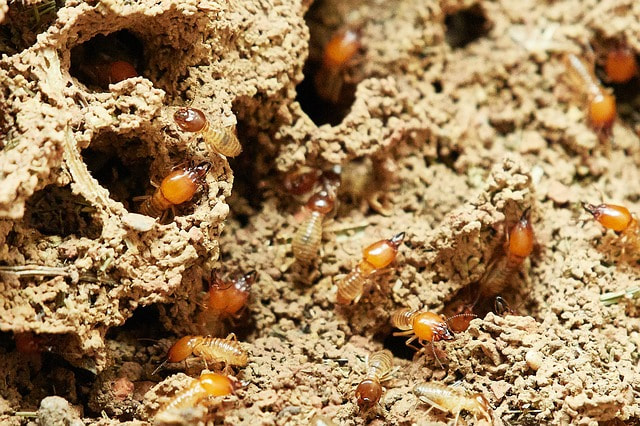
- Swarmers are dark brown or black, while workers are pale and creamy
- Wings break off easily, leaving piles of discarded wings behind
A simple tip: if you can see a clear “waist,” you’re probably looking at an ant.
Signs of Carpenter Ants in Your Home
Carpenter ants are among the most common wood-damaging pests in Ontario homes. They prefer wood that’s already damp or softened, which is why they often settle near leaks, poorly sealed windows, or rotting deck boards.
Watch for these signs:
- Frass: Small piles of coarse sawdust mixed with insect parts, often below windowsills, baseboards, or door frames
- Large black ants indoors, especially at night or in early spring
- Faint rustling sounds inside walls or wooden structures
- Smooth, clean tunnels inside damaged wood that look almost sanded
- Winged ants appearing indoors, which often means a mature nest is nearby
Signs of Termites in Your Home
Toronto does have termites, mainly the eastern subterranean termite, and certain older neighborhoods have dealt with them for decades. These termites live in the soil and travel into homes to feed.
Common signs include:
- Mud tubes: Pencil-width tunnels made of soil running along foundation walls, basement walls, or floor joists
- Hollow-sounding wood when you tap on it
- Discarded wings near windowsills, doors, or light sources
- Damaged wood filled with mud or soil rather than clean tunnels
- Bubbling or uneven paint on wood surfaces
Unlike carpenter ants, termites usually leave no sawdust piles. Their damage stays hidden inside the wood.
Which Causes More Damage?
Both can cause serious structural problems if left alone, but they work at different speeds.
Termite colonies can be massive, and because they actually eat wood, a long-term infestation can seriously weaken floor joists, sill plates, and support beams. Damage often goes unnoticed until it’s extensive.
Carpenter ants generally cause damage more slowly. However, a well-established colony with satellite nests can still weaken window frames, roof eaves, wall studs, and decks over several years. Their presence also often points to a moisture problem that can cause separate damage of its own.
The bottom line is that neither should be ignored. The earlier you identify the pest, the smaller the repair bill tends to be.
What Attracts Them to Your Home?
Both pests are drawn to moisture and damaged wood. Common risk factors include:
- Roof or plumbing leaks that keep wood damp
- Clogged gutters and downspouts that soak fascia boards
- Wood-to-soil contact around decks, porches, and fences
- Firewood stacked against the house
- Tree branches touching the roof or siding
- Poor ventilation in basements, crawl spaces, and attics
Carpenter ants in particular often start nesting in a dead tree or stump nearby, then move into the house through branches, wires, or gaps in the siding.
Why DIY Treatment Often Falls Short
It’s tempting to grab a can of insect spray when you see a few ants on the kitchen floor. Unfortunately, killing the ants you can see rarely reaches the colony. Carpenter ants often have a main parent nest outdoors and multiple satellite nests inside walls, and surface sprays don’t touch them.
Effective carpenter ant control in Toronto usually involves:
- A thorough inspection to locate main and satellite nests
- Identifying moisture sources and damaged wood
- Targeted treatments injected directly into nesting areas
- Slow-acting baits that workers carry back to the colony
- Perimeter treatments to stop new ants from moving in
Termites need their own specialized approach, including soil treatments or baiting systems designed for subterranean colonies. This is why correct identification comes first.
How to Protect Your Home
A few preventive steps can make your home far less appealing to both pests:
- Fix leaks promptly, including roof, plumbing, and window leaks
- Keep gutters clean and make sure downspouts direct water away from the foundation
- Trim trees and shrubs so branches don’t touch the house
- Store firewood at least 20 feet from your home and off the ground
- Replace rotted wood around windows, decks, and trim
- Seal gaps around utility lines, pipes, and cables
- Improve ventilation in basements and attics to reduce humidity
These habits won’t eliminate an existing colony, but they do reduce the chances of a new one settling in.
When to Call a Professional
If you’ve found frass, mud tubes, swarmers, or discarded wings, it’s time for a professional inspection. A trained technician can confirm which pest you have, find out how far the damage goes, and recommend the right treatment.
Since carpenter ants are especially common in GTA homes, getting expert carpenter ant control in Toronto early can stop a small problem from becoming a costly structural repair.
The Bottom Line
Carpenter ants and termites may look alike, but they’re very different pests. Termites eat wood and leave mud-filled damage, while carpenter ants tunnel through wood and push out sawdust. Both thrive on moisture, both stay hidden, and both can weaken your home over time.
Knowing the signs is the first step. If you suspect either pest, don’t wait for the damage to become visible. Professional carpenter ant control in Toronto can identify the problem, eliminate the colony at its source, and help keep your home protected for years to come.