
It’s one of those questions that seems simple until you actually try to answer it. Someone spots a spider on the wall and calls it a “bug.” Someone else sees an ant and calls it the exact same thing. But are bugs and insects really interchangeable terms, or is there an actual scientific distinction hiding behind our everyday language?
As it turns out, the answer is more interesting than most people expect, and understanding it can actually help you identify and deal with unwanted critters around your home more effectively.
The Everyday Use of “Bug”
In casual conversation, “bug” is a catch-all term. People use it to describe almost anything small, creepy, and multi-legged, spiders, centipedes, ants, cockroaches, even the occasional pill bug found under a rock. This broad, informal usage is part of the reason confusion exists in the first place. When someone says, “There’s a bug in my kitchen,” they could be talking about an ant, a beetle, or a spider, and technically, only some of those creatures are insects at all.
What Actually Makes an Insect an Insect
Scientifically speaking, insects belong to a specific class within the animal kingdom called Insecta. To qualify as an insect, a creature needs to meet a fairly strict set of criteria:
- Three body segments: a head, thorax, and abdomen
- Six legs, always in three pairs
- One pair of antennae
- An exoskeleton made of chitin
- Often, though not always, wings at some stage of life
Ants, beetles, flies, bees, cockroaches, and mosquitoes all check these boxes. That’s why entomologists (scientists who study insects) classify them confidently under the Insecta umbrella.
Spiders, on the other hand, don’t qualify. They have eight legs instead of six, two body segments instead of three, and no antennae at all. This places them in an entirely different class called Arachnida, alongside scorpions, ticks, and mites. So while a spider might get lumped in as a “bug” in everyday speech, it is definitively not an insect.
So What Is a “True Bug,” Scientifically?
Here’s where things get genuinely interesting: there’s actually a scientific group called “true bugs,” and it’s far narrower than most people realize. True bugs belong to the order Hemiptera, and they share a very specific trait, specialized mouthparts designed for piercing and sucking, usually used to feed on plant sap or, in some cases, blood.
Bed bugs are one of the most well-known examples of true bugs. Their needle-like mouthparts allow them to pierce skin and feed on blood while their host sleeps, which is precisely why they’ve become such a widespread household concern. Other true bugs include stink bugs, aphids, and cicadas.
So, in the strictest scientific sense, every true bug is an insect, but not every insect is a true bug. It’s a classic case of one category living inside a larger one, similar to how every square is a rectangle, but not every rectangle is a square.
Why This Distinction Actually Matters at Home
Understanding the difference between insects, arachnids, and true bugs isn’t just trivia, it has real, practical implications when you’re dealing with pest problems. Different classifications often mean different behaviors, different habitats, and different treatment approaches.
Take bed bugs, for example. Because they’re a specific type of true bug with unique feeding habits and hiding behaviors, tucking themselves into mattress seams, furniture joints, and wall cracks during the day, they require a very targeted approach to eliminate. Treating them the same way you’d treat a general ant problem or a spider issue simply won’t work, since bed bugs behave, hide, and reproduce in ways that are distinct even from other insects.
This is exactly why a proper bed bug inspection is such a critical first step before any treatment begins. Because bed bugs are experts at hiding in tiny crevices and only come out to feed at night, visual confirmation alone often isn’t enough to determine the true scope of an infestation.
What a Professional Inspection Actually Involves
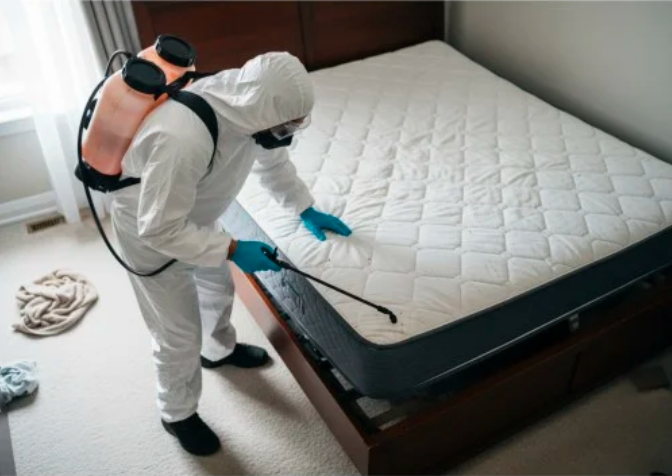
A thorough bed bug inspection typically goes far beyond a quick glance at your mattress. Trained technicians know exactly where to look, along seams and piping, inside box springs, behind headboards, in electrical outlets, and even inside picture frames near the bed. Some inspections also use specialized tools like flashlights, magnifying equipment, or even trained detection dogs to identify bed bugs and their telltale signs: shed skins, tiny dark fecal spots, or the eggs themselves, which are barely visible to the naked eye.
Because bed bugs are true bugs with piercing mouthparts built specifically for feeding on blood, and not general insects that might simply wander through your home, identifying them correctly matters. Misidentifying a bed bug problem as a general insect issue can lead to wasted time, ineffective treatments, and an infestation that continues to spread while you’re addressing the wrong pest entirely.
So, are bugs and insects the same thing? Not quite. “Bug” is a broad, informal term people use for almost any small crawling creature, while “insect” refers to a specific scientific classification with defined physical traits. And nested within insects is an even narrower group, true bugs, which includes some of the most notorious household pests, like bed bugs, precisely because of their specialized feeding behavior.
Understanding these distinctions isn’t just for entomology enthusiasts. It can genuinely change how you approach a pest problem at home. If you suspect bed bugs specifically, rather than a general insect issue, starting with a professional bed bug inspection ensures you’re dealing with an accurate diagnosis rather than guessing based on a creature you glimpsed for two seconds before it disappeared under the mattress. Getting the classification right is often the first step toward getting the treatment right, too.