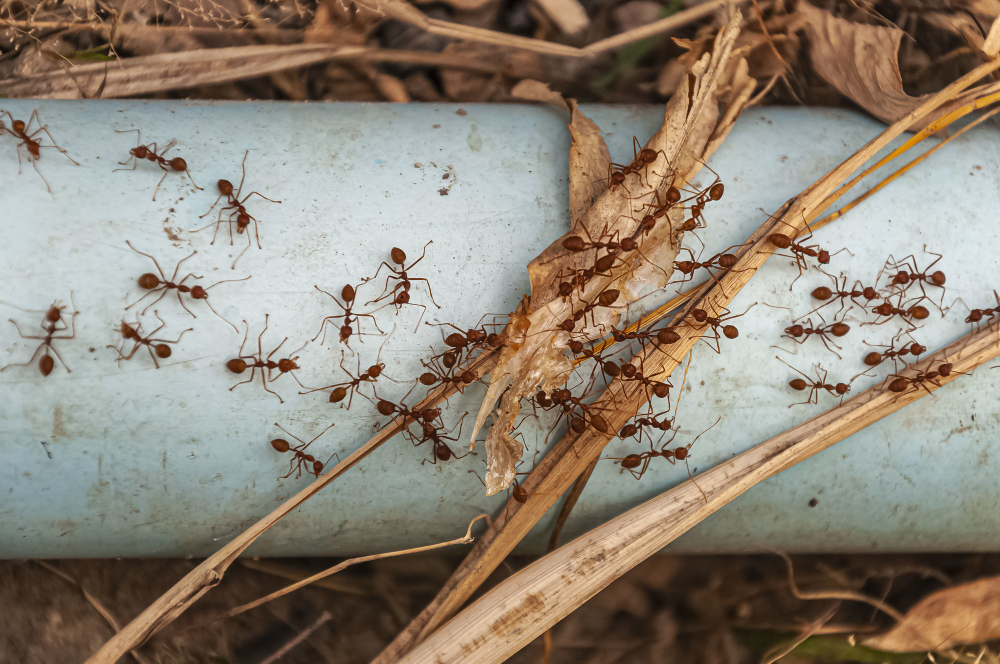
After a few days of heavy rain, many Toronto homeowners notice something odd. The ant trail that ran along the kitchen baseboard all week suddenly disappears, or ants start showing up in rooms where they’ve never been seen before, such as the bathroom, the laundry room, or a basement windowsill. Both situations raise the same question: where did they go, and are they coming back?
The honest answer is that ants rarely go away because of rain. Wet weather changes where they are and what they’re doing, but the colony almost always survives. Understanding what happens to ants during a rainy spell makes it much easier to tell whether you’re dealing with a passing nuisance or a colony that has moved into the structure of your home.
What Rain Actually Does to an Ant Colony
Most ants that bother Toronto homes nest in soil: under patio stones, along the foundation, beneath driveways or in lawns. These nests are more resilient than they look. A colony isn’t a single chamber near the surface but a network of tunnels and rooms that can extend well below ground, with the queen and brood usually kept in the deepest, most protected sections.
When heavy rain starts, worker ants often plug entrances with soil to slow the water down. If the lower chambers begin to flood, the colony moves its eggs, larvae and pupae to higher and drier ground. That can mean upper chambers in the same nest, a spot under a paving stone that stays dry, or somewhere even more sheltered, such as the gap between your foundation and your siding.
Foraging also stops during a downpour. Rain washes away the scent trails ants use to navigate, and many food sources outdoors get scattered or spoiled. Once the rain eases, the colony is hungry, its old trails are gone, and scouts are sent out looking for anything reliable. For many colonies, the closest dry, food-rich place is the inside of a house.
So when ants vanish during a storm, they are usually sheltering nearby. When they suddenly appear somewhere new afterward, they’ve either relocated or found a new route in.
Why Your Home Becomes the Obvious Choice
A house offers everything a displaced colony needs: stable temperatures, protection from water, and a steady supply of crumbs, spills, pet food and moisture. Ants get in through gaps that are nearly invisible to us, including cracks in foundation walls, spaces around utility lines, worn weather stripping, and the tiny channels where siding meets brick.
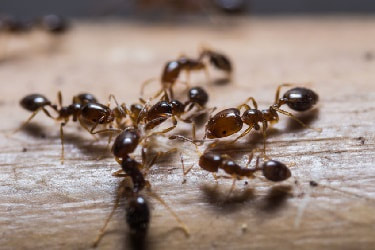
Some species are especially quick to move indoors when conditions get damp. Odorous house ants, the small dark brown ants that give off a rotten-coconut smell when crushed, are known for invading homes during and after wet weather. Pavement ants, which nest under sidewalks and slabs, often follow the foundation straight into basements. Neither is dangerous, but both can build large, persistent populations if they settle inside.
Carpenter Ants and the Moisture Connection
Carpenter ants deserve their own section because they are the species most likely to actually be in your walls, and wet weather is closely linked to their activity.
Carpenter ants don’t eat wood, but they excavate it to make nests, and they strongly prefer wood that has been softened by moisture. A slow leak around a window frame, a damp spot under a bathroom floor, a deck ledger board that stays wet, or a roofline where water has been getting in for years all make ideal starter sites.
A rainy season doesn’t create carpenter ants, but it can reveal them. As water finds its way into the weak points of a building, the damp wood becomes more attractive, and satellite colonies may form closer to living spaces. That’s when homeowners start noticing large black ants wandering indoors, often at night.
Signs that carpenter ants are nesting inside the structure include:
- Small piles of fine, sawdust-like material, called frass, near baseboards, window frames or door casings
- Faint rustling or crackling sounds inside walls, particularly in quiet evening hours
- Winged ants appearing indoors, usually in spring, which suggests a mature colony somewhere in the building
- Large black ants seen indoors during the colder months, when outdoor colonies should be inactive
That last point is important. If you see ants inside during a Toronto winter, it usually means the nest is already inside, not outdoors.
How to Tell Whether They’re Coming In or Living In
Where ants appear, and how they move, tells you a lot about where the colony is.
If a trail runs in a clear line from a door, window or crack in the foundation to a food source, and the ants disappear back outside, you’re most likely dealing with an outdoor colony that forages inside. That’s still worth addressing, but it’s a very different situation from an indoor nest.
If ants seem to come out of the wall itself, from an electrical outlet, a gap in the baseboard, or a crack in the drywall, the colony may be living inside the structure. The same applies if activity continues long after the rain has stopped and the ground has dried out, or if you find ants in several separate rooms at once.
A professional assessment for ant control in Toronto often comes down to this distinction, because it determines where treatment needs to go. Spraying the kitchen won’t solve a problem that starts inside a wall cavity or under the front steps.
What to Do (and What to Avoid) After the Rain
It’s natural to reach for a can of spray as soon as ants show up. In many cases, that makes the problem harder to solve. Contact sprays kill the workers you can see, but the colony, which may number in the thousands, stays untouched. With some species, such as pharaoh ants, disturbing the colony can cause it to split into several new colonies, spreading the problem around your home.
A more useful approach looks like this:
- Watch before you act: Note where the ants are coming from and where they’re going. That information helps anyone treating the problem.
- Remove what’s drawing them: Wipe counters, store food in sealed containers, rinse recycling, and pick up pet food bowls overnight.
- Deal with moisture: Fix leaking taps and pipes, run a dehumidifier in a damp basement, and check around windows and bathroom fixtures for soft or stained wood.
- Manage water outside: Clear gutters, make sure downspouts carry water well away from the foundation, and pull mulch and leaf litter back from the house walls.
- Trim back plants: Branches and shrubs touching your siding act as bridges straight into the home.
- Seal gaps later, not first: Caulking entry points is worthwhile, but doing it before the colony is dealt with can trap ants inside and push them to find new routes.
When It’s Time to Call a Professional
A few ants after a storm aren’t cause for alarm, but some situations call for expert help. These include activity that continues well after the weather clears, large black ants indoors, frass near woodwork, winged ants inside, or ants that return no matter what you try. Apartment and condo residents should also act early, since colonies can move between units through shared walls.
Effective ant control in Toronto starts with correctly identifying the species, because each one responds to different methods. Baits that work well against one type can be ignored by another, and treatments that suit an outdoor colony won’t reach a nest inside a wall.
Ant Problems After the Rain? We Can Help
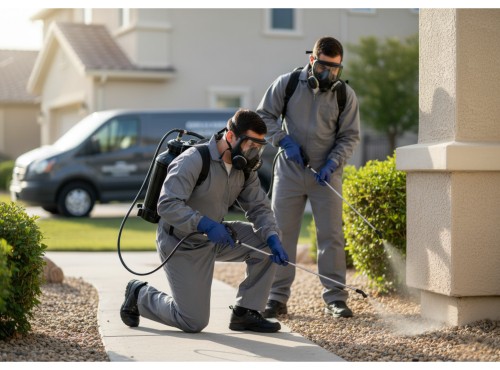
At GTA Toronto Pest Control, we’ve been tracking ant trails back to their source for homeowners and businesses across the GTA since 1998. Our Ministry of the Environment-licensed technicians identify the species on-site before any product goes down, then inspect inside and out, including foundations, wall voids, and landscaping, because in many Toronto properties the main colony is outdoors.
We use gel baits, dusts or targeted sprays depending on what we find, with the aim of eliminating the queen and the colony as a whole rather than just the workers you can see. Every visit is covered by our 6-month warranty, and if ants come back within that period, we’ll return at no extra cost. For same-day ant control in Toronto, with a clear quote before we start and 10% off for first-time customers, call us at (416) 907-4270.